Football

Tennis

Darts

Cricket

Golf

Horse Racing

F1

Boxing

MMA

Any

Yes

No

Cash Out
Not Needed

Debit card

Paypal

Neteller

Skrill

Apple Pay

PaysafeCard

Trustly

MuchBetter

Deposit match

Enhanced odds

Free Bets
Don't want a bonus

What is Liability in Betting? – Complete Guide to Betting Liability

Understanding what is liability in betting is crucial when laying and backing at betting exchanges. However, liability is often used specifically for lay betting, standing as the total amount you stand to lose if your lay bet is unsuccessful.
In this guide, we provide everything you need to know about the subject of betting liability.
How Does Liability in Betting Work?
When you place a bet on traditional betting sites, your liability is essentially your stake amount. If you lose your bet, you forfeit the amount placed on an event. Betting exchange liability is more complicated, as users can back (bet for) and lay (bet against) the outcome of an event.

Backing wagers on peer betting platforms like Betfair is similar to betting on traditional online betting sites – your liability is limited to your stake. This means this is the maximum you stand to lose if the outcome does not match your bet. Here are some examples.
- Backed Bet Example 1 – You place a £20 bet on Liverpool to beat Aston Villa in the FA Cup at odds of 2.0. This means your liability is £20 if you lose; if your bet wins, you receive £40 (£20 profit + £20 stake).
- Backed Bet Example 2 – A £50 bet on Galopin Des Champs to win the big horse racing event at odds of 3.0 means your liability is £50 if it loses; should you win, you are paid out £150 (£100 profit +£50 stake).
One of the advantages of betting with a bookie is that liability is easy to both understand and track. Your bet stake, which is deducted from your balance up front, is all you stand to lose in the worst-case scenario.
Things can get a little trickier when it comes to lay betting on exchanges.
Lay Betting Liability Explained
A lay wager is backing something not to happen with other bettors on gambling platforms. Unlike betting for Liverpool to beat Chelsea at traditional bookies, lay betting markets on betting exchanges allow you to place money on them not winning. Lay bets win if Liverpool lose or draw – your liability is the total payout made if the backer’s bet is successful.
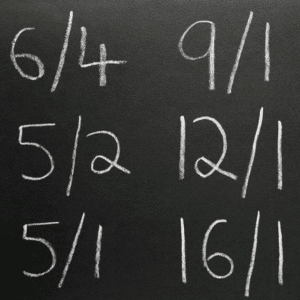
How much liability a layer carries can vary with the risk involved, and it is usually tied to the betting odds and bets taken. A successful layer, however, can win the total stake of back bets. In either case, learning to calculate lay betting accurately can help with some of the following.
- Working out if laying at the betting odds available makes sense.
- Helping to work out potential losses in advance.
- Ensuring your balance is sufficient to cover liabilities.
- Understanding how high your ceiling is for laying within your budget and limits.
Most betting exchanges only allow you to risk up to your account balance to ensure fairness and security. When you lay, you take on a similar role to that of a bookmaker, whereby it’s your responsibility to pay out when you lose a wager. This is because you are essentially offering odds to punters when laying at exchanges.
How to Calculate Liability in Lay Betting
Betting exchange liability refers to the overall sum a lay bettor is required to pay backers should the bet not go their way. While a betting calculator handles most of this work automatically on the majority of betting exchanges, there is a straightforward formula available for working it out manually.
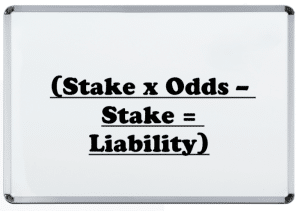
A good tip for better understanding the calculations in lay betting is to find markets displaying odds on platforms like Sporting Index and Betfair. While the computer does the magic for you, try to work out your liabilities first. You can do this by using the formula above and then entering your stake to see if the numbers tally up.
Here are a couple of examples of liability in lay betting, to get you started.
Champions League – FC Copenhagen (18.0) vs Man City (1.25)
- Liability for a £10 lay bet on Man City is £2.50 (£10 x 1.25 = £12.50 – £10 = £2.50)
- Liability for a £10 lay bet on FC Copenhagen is £170 (£10 x 18.0 = £180 – £10 = £170)
UFC – Geoff Neal (3.2) vs Ian Garry (1.5)
- Liability for a £10 lay bet on Geoff Neal is £22 (£10 x 3.2 = £32.00 – £10 = £22)
- Liability for a £10 lay bet on Ian Garry is £5 (£10 x 1.5 = £15.00 – £10 = £5)
Does Commission Affect Liability?
You can factor commission into your liability. Betfair and other betting exchanges charge commission on your net profits in a market, which means a net loss on that market will not attract any commission charges. Before you place your bets, it is best to establish any costs and charges involved.
Betting Liability Calculator
You’re unlikely to get caught up in complicated betting equations with back bets. Lay bets can be more complicated, however, which makes a lay bet calculator a good tool to employ. These are available at betting exchanges and other sites.
Bookmaker Betting Liability Explained
Bookmakers accept bets from customers at set odds and must pay out for every punter’s successful wager. Their total exposure (liabilities) is the amount of potential winning bets, which heavily lean toward the more favourable outcome. One of the main ways a bookmaker manages liability is by reducing odds on favourites and increasing them elsewhere.

Bookies can maximise profits by minimising their liabilities. In other words, the total liabilities for a betting site must be adequately balanced to manage the risk of major losses. If they have accepted a significant volume of bets on one team, they stand to face big payouts.
While it isn’t of critical importance when learning topics related to what’s a liability in betting, it can help. Here are some of the ways betting sites and bookies mitigate their exposure.
- A Cut on Every Stake – Odds you get for backing either side in an event already guarantee a profit for bookies – their margin, usually a percentage lower than 10%, has been factored into what they pay out for all successful bets.
- Drastically Lower Odds – Bookies may slash Premier League betting odds for the next manager to get sacked from 10/11 to 1/25, making it pointless for most to wager on.
- Reduce Max Stake on Bets – Online betting sites may limit the maximum stake allowed on the heavily backed market, which can help curtail exposure.
- Hedging – Some bookmakers may look to offset bets and liabilities with other bookies or on gambling exchanges.
- Offer Price Boosts and Promotions – Bookmakers may offer significantly higher odds or an enticing horse racing free bet in exchange for backing the other horse or team.
Bookies tend to stay a step or two ahead of the average punter. That makes it useful to look closely at their methods and at how they manage their exposure, particularly if you plan to work out the best ways of dealing with your own exchange betting liability.
Other Betting Guides
If you are enjoying our guide to betting liability, you may find some of our other gambling literature helpful.




What is Matched Betting Liability?
Liability in matched betting is the potential losses you can incur from matched betting. The practice involves looking to profit from new customer free bets and promotions provided by bookies and betting sites.

In matched betting, the aim is to find profitable betting offers and structure your bets so the return does not depend on the result. You do this by placing lay bets against your original bet, either at other sites or on betting exchanges. Your liability, then, is the money you stand to pay out on those lay bets if the backed bet is successful.
Here’s an example from a Premier League match between Tottenham and Wolves. Remember, the formula to work out liability in lay betting is (stake x odds – stake = liability).
- You back Tottenham to win at odds of 2.0 with a £10 free bet (£10 x 2.0 = £20 – £10) [Liability Capped at £10]
- You lay a £10 bet on Wolves to win at odds of 4.0 (£10 x 4.0 = £40 – £30) [Liability is £30]
Should Spurs win, your £10 back bet returns £20; once the lay bet is factored in, that leaves you with a net loss of £0. If Wolves win instead, or the match finishes as a draw, the lay bet pays out £30 plus your £10 stake, which leaves you holding a total balance of £30. That figure reflects the fact that the £10 bet on Spurs lost in this scenario.
Both individual and shared liability matched betting are not illegal at sites licenced and regulated by the United Kingdom Gambling Commission and other reputable authorities. But you should exercise caution and check if the bookies you are betting on have rules or restrictions on such activities. With that covered, we are confident that’s matched betting liability explained for now.
Advice & Tips for Reducing Liability
Managing risk by reducing liability is one of the most important betting principles to learn, particularly if you want to make full use of the many advantages that lay betting offers. Below are five tips to help you reduce your liability in betting.
Employ Good Organisation and Planning
Keeping track of your betting patterns goes a long way. You can do this by keeping records and using betting spreadsheets and other betting tools. Setting goals, caps, and budgets can help with reducing liability. Knowing what you stand to lose helps with making necessary adjustments.
Start with Smaller Stakes
There are myriad silly mistakes one can make as a novice bettor. Starting with smaller stakes on 1×2 football market bets or similar allows you to gain more experience while limiting liability money owed on your balance sheet. Laying at big odds by mistake, for example, won’t hurt as much if things go wrong.
Learn How to Green Up
Greening up in betting is a process whereby a bettor can secure some form of profit regardless of the outcome of an event. To achieve this, you must back and lay – and simultaneously adjust wagers on both sides throughout the course of the event – to limit liability and identify potential locked-in profits.
Try Partial Laying
When learning what is liability in betting, it’s a good idea to consider partial laying. This is the process of laying multiple bets at stakes representing a fraction of your full liability. Partial laying is a good strategy in cases where you are not entirely confident in the result of an event.
Target Odds-On Prices
Laying a bet means accepting another punter’s back bet at the selected odds. When you have a grip on what is liability in lay betting, you’ll understand that these odds affect your exposure. Thus, it is a good idea to sometimes lay favourites at odds-on prices (lower than evens) to reduce your total liabilities.
Conclusion
A good comprehension of betting liability is essential to anyone using betting exchanges. Especially when laying bets. Although the principle of liability is fairly easy to understand, the trickier aspects of the subject can lead to confusion. With more practice and understanding, you will be able to handle your betting liabilities more professionally.
FAQ
What’s a liability in betting?
How do you work out betting exchange liability?
Are lay betting stake and liability the same?
How is Betfair matched betting liability worked out?
What is the difference between lay stake and liability costs?
-
 Premier League Referees are Giving 21.6% More Yellow Cards in 2024-25 at 5.13 Cards/Game
-
Connecticut Sun highest paying WNBA team with an average salary of $139.9 thousand
-
Global spending on football transfers down by 10.5% in 2024
-
Illegal sports streaming most popular in Bulgaria and Greece among EU nations
-
Brighton biggest spenders in the window with a €182.91m net outlay